


Over the past year, a phrase has worked its way from social feeds into mainstream headlines: “stunt sex.” Used to describe sensational, publicity-driven adult content challenges, it’s drawn both fascination and fierce criticism. Are we witnessing a momentary fad, or a deeper trend within adult entertainment and digital culture?
As someone who’s followed media and sexuality trends for years, I believe what’s happening now goes beyond headline-grabbing provocations — it reveals something about the attention economy, digital fame, and how sex and spectacle collide in the 21st century.
Key Highlights
Here’s what you need to know about the rise of stunt sex:
- Stunt sex, featuring extreme acts like a world record gangbang, is making a comeback thanks to the internet.
- The trend isn’t new; it dates back to performers like Annabel Chong in the 1990s.
- Modern performers on platforms like OnlyFans are reviving the format to gain attention.
- This type of sexual content raises significant questions about safety, consent, and exploitation.
- The aftermath often reveals a darker side, with performers expressing feelings of being “robotic.”
Introduction
Lately, my news feed has been buzzing with stories about performers like Bonnie Blue and Lily Phillips. They’re making headlines for undertaking extreme sexual stunts, reminiscent of something I recall from decades ago. It seems that “stunt sex,” a phenomenon that captured attention in the 90s, has found new life on the internet. This isn’t just about creating sexual content; it’s about pushing boundaries for views and notoriety. Is this just a passing fad, or is this extreme trend here to stay?
Defining Stunt Sex in Today’s Adult Industry
So, what exactly is “stunt sex”? In the context of today’s adult content, it refers to a performance designed to generate buzz through an extreme or record-breaking sexual act. Think of it as the adult industry’s version of a high-risk stunt, crafted for shock value and viral potential.
These events are often marketed as a world record attempt or a unique challenge, like having sex with hundreds of people in a day. It’s a specific type of sexual content built around a singular, sensational feat.
What Sets Stunt Sex Apart from Standard Performances
Unlike standard adult performances, which might focus on a story or specific fetish, stunt sex is all about the spectacle. The goal isn’t just to create an erotic scene but to achieve something quantifiable and shocking—like sleeping with 101 men in one day, as OnlyFans star Lily Phillips did. The performance becomes secondary to the accomplishment itself.
This approach is seen by some performers as an effective solution to stand out in an incredibly saturated market. On platforms like OnlyFans, where thousands of creators compete for subscribers, a headline-grabbing stunt can feel like the quickest path to fame and financial success. It’s a way to cut through the noise and attract a massive audience almost overnight.
However, this focus on extremity brings significant risks. The logistics and safety measures are often far more complex than in a standard shoot, and when they are overlooked, as was seen in Phillips’s documentary, the physical and emotional toll on the performer can be immense. The pressure to complete the stunt can overshadow basic safety and consent protocols.
Evolution of the Term and Its Cultural Meaning
The idea of stunt sex isn’t a product of the social media age. I remember this happening back in the mid-90s. The term’s meaning has evolved with the platforms on which it appears. Originally, these were high-production events released as feature films, designed to break records and generate massive sales.
Now, the meaning is more tied to individual creators on the internet who use these stunts for personal branding and direct monetization. Eva Wiseman wrote in The Guardian that the men involved in these modern stunts receive barely a thought, with the focus remaining squarely on the women. This shift highlights a cultural tension between empowerment and exploitation.
Iconic Stunt Sex Acts: From Annabel Chong to Modern Performers
When I think about the history of this trend, one name immediately comes to mind: Annabel Chong. Her infamous gangbang event was one of the first of its kind to capture mainstream attention. It set a precedent that seemed to fade away for a couple of decades.
Now, a new generation of modern performers is revisiting this formula. An OnlyFans model like Lily Phillips or Bonnie Blue is creating a modern-day sequel to what Chong started, using today’s technology to broadcast their attempts to a global audience.
Notable Historic Stunts and Their Impact

In 1995, Annabel Chong starred in “The World’s Biggest Gang Bang,” a film billed as her having sex with 300 men. In reality, she engaged in 251 sex acts, an incredible number that was presented as a world record attempt. The event was so notorious that it led to a documentary, “Sex: The Annabel Chong Story,” which became a hit at the Sundance Film Festival.
Following this, Jasmin St. Claire filmed a sequel, “World’s Biggest Gang Bang 2,” advertised as her performing 300 sex acts. She later admitted it was a “con,” involving only about 30 men. Despite the deception, the concept itself cemented the gangbang stunt as a part of porn history.

These events were controversial from the start. Chong was promised $10,000 but was allegedly never paid. More alarmingly, the health and safety protocols were dangerously lax; participants were not required to provide proof of negative HIV tests, contrary to what she was told. This history casts a long shadow over the stunts we see today.
Looking Back at Houston: The Original 500-Person Claim and a Record That Soared
No conversation about stunt-driven performance in adult entertainment can skip over one of the earliest — and most talked-about — attempts to set a massive participation benchmark. In the late 1990s, adult entertainer Houston (born Kimberly Halsey) made headlines with a stunt that was originally framed around 500 partners but ultimately exceeded that target significantly, leaving a legacy that still bubbles up in today’s record-chasing chatter.
Houston, who became known as a veteran face in adult production and later earned a place in the AVN Hall of Fame, first pitched the idea of a 500-person event as a way to make a splash and reinvigorate her career. What followed was a marathon session filmed live on set, initially promoted as The Houston 500 — but when the day was done, she and the production team had surpassed the goal. They recorded 620 encounters over roughly 8–10 hours, a total that would stand as a record for years within the genre.
Houston herself later reflected publicly on the event’s scale and intensity, noting that she had planned for 500 but kept going as participants continued to arrive — and that real-time enthusiasm helped push the count to 620. This feat was captured in the adult film The World’s Biggest Gang Bang III – The Houston 620, which went on to become one of the top-selling tapes of 1999 and won industry accolades, including an AVN award for Best Selling Tape of the Year.
Houston’s Approach
While Houston’s approach was very much a product of its time — pre-social-media, reliant on VHS distribution and magazine coverage — the stunt foreshadowed the numbers-driven strategies we see today. Record-chasing and high-participation claims remain part of the conversation, whether in nostalgic industry talk or in comparisons with contemporary creators pushing for viral visibility.
Her story also serves as a reminder of how these events were marketed and interpreted. Houston once said the stunt was “not about sex” but “just a freak show” meant to capture attention and brand momentum, illustrating how spectacle and persona have long intertwined in adult entertainment marketing.
Today, as new performers experiment with their own attention-grabbing events — often amplified by social platforms and direct subscription models — Houston’s 1999 record still pops up as a reference point in media coverage and fan discussion about how extreme content gets made and remembered.
Recent Entrants—Bonnie Blue, Annie Knight, Lilly Phillips

Fast forward nearly 30 years, and the stunt is back. OnlyFans model Lily Phillips, 23, documented her attempt to sleep with 101 men in a day. The film went viral not just for the act itself, but for its raw, tearful aftermath, which showed Phillips feeling “robotic” and “disassociating.”
This has seemingly kicked off what some call an “OnlyFans arms race.” Controversial creator Bonnie Blue — real name Tia Billinger — has become the poster figure for modern stunt sex. Bonnie Blue, claimed to have had sex with 1,057 men in 12 hours, a stunt critics have called “mathematically impossible.” These events, along with others by performers like Maxine X (also known as Annie Knight), are designed to generate maximum social media buzz.
Australia: The Down Under
Australian content creator Annie Knight, another central figure in this trend, has been vocal about her intentions. Knight said in an interview that the structure she developed — using numerical goals and challenge formats — inspired other creators, including Blue: “That format has since inspired others to create their own takes, like Bonnie’s 1,000 men stunt earlier….”
She emphasizes that her approach is grounded in consent and connection, telling Us Weekly: “My content exists to empower. I’ve always been clear that the people I sleep with are not there to ‘use my holes,’ but to connect with someone they’ve followed, respected, and want to meet.” Yahoo

Knight’s comments underline a key divide: for some performers, these stunts are marketing tools; for others, they are framed as intentional efforts to redefine agency within adult work.
The goal for these modern performers is clear: stand out in a crowded digital marketplace. The more extreme the stunt, the more clicks, subscribers, and money it generates. It’s a high-risk, high-reward strategy for building a brand in the competitive world of online adult content.
Preparing for Sexual Stunts: Behind the Scenes
Pulling off an event like this requires an immense amount of preparation, or at least it should. The logistics involve everything from finding a location to recruiting participants and, most importantly, implementing safety measures.
The use of condoms is a baseline requirement, but true preparation goes much deeper. It involves mental and physical readiness, a strong support team, and clear, enforceable rules to protect the performer. As we’ll see, this preparation can vary wildly.
Performer Insights on Training and Preparation
How does someone even get ready for something like this? For Lily Phillips, the preparation documented in her film appeared haphazard. She recruited men through an application form that required an STI test, but the event itself was chaotic, and her team felt overwhelmed. There wasn’t even time for her to eat lunch.
The film shows the difficult decision-making process in real time. Phillips’s decision to undertake the stunt seems driven by a desire for an effective way to earn more money and gain fame. She described her thinking as a way to compete in a hypercompetitive industry.
However, the documentary reveals the lack of mental and physical training necessary for such an ordeal. Phillips’s tearful breakdown at the end suggests she was unprepared for the psychological aftermath, describing how she had to “disassociate” to get through it. This emotional toll is a part of the experience that is rarely discussed beforehand.
Expert Perspectives on Safety, Risk, and Consent
From a safety perspective, these stunts are a minefield. Jessie Sage, a sex worker who reviewed the Lily Phillips documentary for Rolling Stone, pointed out numerous safety deficiencies. These included a lack of security guards, no background checks, and what she called a “cavalier” attitude toward sexually transmitted infections.
This isn’t a new problem. Annabel Chong’s event decades ago had far fewer safety measures than even today’s independent shoots. Men who were professional performers were allowed to participate without condoms, and STI testing was not properly verified. These risks are amplified in modern, independently produced stunts that lack the oversight of a professional studio.
Ultimately, the conversation turns to consent. Can a performer give enthusiastic consent over and over in such a high-pressure, exhausting environment? Critics argue that the format itself is inherently coercive, prioritizing the completion of the stunt over the performer’s ongoing well-being and ability to make clear-headed decisions throughout the event.
The Shift Toward Mainstream Attention
The internet has completely changed the game for this kind of content. What was once confined to specialty video stores is now accessible with a click, reaching a massive global audience. This widespread visibility has even caught the attention of public officials in countries like Indonesia, where Bonnie Blue was banned for her activities. Blue has said of her career, “You can do this job [sex work] because you enjoy it, because it’s a million-dollar business,” emphasizing both personal agency and the commercial reality of her strategy.
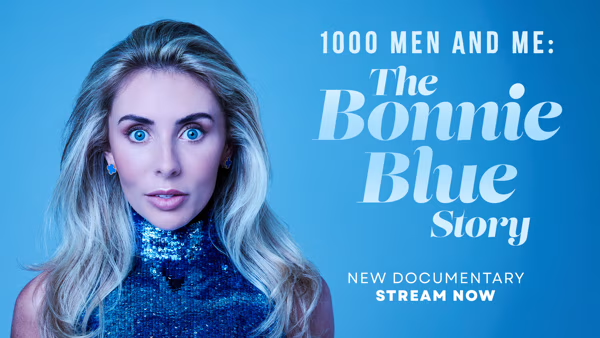
This mainstream attention is a double-edged sword. While it brings performers fame and money, it also invites intense scrutiny from the public, media, and authorities, sparking a much broader conversation about the sexualization of our culture.
Why Extreme Acts Are Trending on Platforms Like OnlyFans
The “why” behind this trend is largely economic. Platforms like OnlyFans and Instagram have created a direct-to-consumer market where creators are also marketers. In a sea of content, from simple nudity to full-on scenes, extreme acts are a way to guarantee attention. A creator’s success is often measured in follower counts and subscriber numbers, and a viral stunt is the fastest way to boost both.
OnlyFans thrives on a feeling of connection. Subscribers pay for exclusive content, the ability to message creators, and even custom videos. This model incentivizes performers to constantly up the ante. A creator might start with suggestive photos, move to explicit videos, and eventually see a large-scale stunt as the next logical step to keep their audience engaged and paying.
As a result, these platforms have become the primary place to find this content. Viewers can subscribe directly to a creator’s OnlyFans page to watch the videos, turning these stunts into highly profitable, pay-per-view events for the performer.
Audience Reactions and Social Media Influence
The audience reaction to these stunts is deeply divided. When Lily Phillips’s documentary went viral, the internet reaction was near-universal disgust and concern. Her tearful confession that she didn’t orgasm once and felt “robotic” resonated with many, sparking a wave of sympathy but also intense criticism.
On social media, you see a wide spectrum of opinions. Some people blame the men who participate, while others defend the performer’s agency and right to choose. In Phillips’s case, she said her tears were partly due to men shaming her for not allowing them to finish. This complexity is often lost in the viral clips and hot takes.
This social media firestorm is part of the business model. The outrage, debate, and curiosity all drive engagement and push the content to a wider audience. Whether positive or negative, the attention ultimately benefits the creator by boosting their profile and, in turn, their earnings.
Legal and Ethical Considerations in Stunt Sex Content
Beyond the social debate, there are significant legal and ethical questions. Filming laws, privacy issues, and the potential for exploitation are all major concerns. When you have an event with hundreds of participants, questions about consent, documentation, and the legality of distributing the content become incredibly complex.
The line between a consensual business transaction and exploitation can be very thin. Allegations of sexual assault or coercion are serious risks, and the unstructured nature of these independent stunts can create a legally ambiguous environment for everyone involved.
Filming Laws and Privacy Issues in the United States
In the United States, filming laws regarding adult content vary significantly by state, creating a complicated legal patchwork. Federal law requires producers to maintain records proving all performers are over 18 and have consented, but enforcement can be challenging for user-generated content.
Privacy issues are another huge concern, not just for the main performer but for all participants. Ensuring that every person has legally consented to be filmed and that their image is distributed can be a logistical nightmare. Some states have stricter laws than others regarding the production and distribution of pornography.
For example, states like Virginia have specific obscenity laws that could potentially apply to the production or distribution of such extreme content. The legal risks depend heavily on where the content is filmed and distributed.
| Legal Consideration | Details |
|---|---|
| Age Verification | Federal law (2257) requires documentation proving all performers are 18 or older. |
| Consent | All participants must provide clear, documented consent to be filmed and for the footage to be distributed. |
| State Obscenity Laws | Laws vary by state; what is legal in California may face challenges in states like Virginia or Utah. |
| Privacy Rights | Participants have privacy rights that must be respected, often through detailed release forms. |
Industry Approaches to Performer Protection
In the mainstream adult film industry, there are established protocols for performer protection. These include mandatory, regular STI testing, on-set safety coordinators, and clear contractual agreements. These safety measures are designed to minimize risks and provide a baseline of care for performers.
However, many of these independently produced stunts operate outside of this system. As we saw with Lily Phillips, her shoot suffered from a lack of security and a relaxed attitude toward STI protocols. This DIY approach increases the risk of exploitation and physical harm, as the performer often bears the full responsibility for their own safety.
This lack of oversight is a major point of criticism. While performers may see these stunts as empowering, the absence of industry-standard performer protection leaves them vulnerable. The controversy around Annabel Chong’s event, where she was allegedly not paid and exposed to health risks, serves as a powerful cautionary tale about the dangers of prioritizing spectacle over safety.
Mental and Physical Health
Mental health is a crucial aspect of overall well-being that should not be overlooked. By maintaining a healthy sleeping routine, being mindful of your consumption habits, engaging in therapeutic activities, and fostering a positive mindset, you can significantly impact your mental wellness. Remember, taking care of your mental health is just as important as caring for your physical health. So, prioritize self-care and seek support when needed to lead a fulfilling and balanced life. Your mental health matters – make it a priority.
So — Fad or Lasting Trend?
From where I sit, stunt sex is not simply a temporary craze — it’s symptomatic of deeper changes in how content is created, consumed, and monetized online. In a digital world where virality can translate directly to bankable income, some performers leverage controversy as a strategic tool in a crowded media ecosystem.
But whether this trend endures, or evolves into more nuanced forms of visibility and performance, remains uncertain. What’s clear is that it has sparked conversations across sex work, media studies, and culture at large — from debates over empowerment and exploitation to how sexual content is regulated and consumed in the digital age.
Frequently Asked Questions
Is stunt sex safe and are there specific risks performers face?
No, stunt sex is not inherently safe. Performers face high risks of STIs, even with condoms, due to the sheer number of partners. There are also significant risks of psychological trauma, exploitation, and even sexual assault, especially when proper safety measures are not in place for the stunt.
Where can viewers legally watch stunt sex acts online?
Viewers can often find this sexual content on creator-based platforms like OnlyFans, where they subscribe directly to the performer. However, the legality of viewing and distributing such content can vary depending on local laws, such as those in Virginia. The internet makes access easy, but privacy issues remain a concern.
What motivates performers to participate in high-profile stunt sex events?
Motivations vary, but they often include financial gain, a desire for fame, and the ambition to set a world record. In a competitive market, it’s a high-stakes gamble to capture an audience. While performer protection should be key, the drive for notoriety often becomes the primary focus.
By: Jill Hills, Sexpert

Further Reading & Cultural Commentary
- Bonnie Blue documentary is sad, uncomfortable and prurient viewing — The Independent explores how stunts are framed in mainstream media. Read this cultural review in The Independent
- Bonnie Blue: taking clickbait to extremes — The Week examines media and marketing forces behind extreme content. Explore the attention economy analysis in The Week
- The science of PR stunts: What separates genius from cringe? — PR and cultural context on why public stunts captivate and divide audiences. Learn PR stunt theory and digital culture insights